

You can spot a struggling roofing company by what the owner asks for: more leads. More calls, more form fills, more storm chasers knocking on doors.
But spend a week inside almost any roofing business, and you’ll see the truth — the leads are already there.
They came in, then quietly slipped away. A missed call at 7:42 a.m. A quote that never got a follow-up. A five-star job that never turned into a review or a referral.
Roofers don’t have a lead-volume problem. They have a lead-leakage problem.
And it’s a fitting metaphor for the trade: the whole business exists to stop water from getting where it shouldn’t — yet the marketing and sales pipeline behind it is full of holes.
This guide is the complete system for plugging those leaks. We’ll cover everything from the roofing industry’s 2026 landscape to local SEO, Google Ads, storm and insurance marketing, reviews, referrals, content, email, your sales process, CRM, automation, budgets, and the exact KPIs that tell you it’s working.
The goal isn’t to pour more water into a leaky bucket. It’s to build a bucket that holds.
What’s inside this guide
- The roofing market in 2026: opportunity and the trap
- Why more leads won’t fix a leaky funnel
- The roofing lead engine: a system, not a stack of tools
- Roofing lead generation systems
- Local SEO: own the map pack
- Your website: the highest-leverage leak to plug
- Google Ads for roofers
- Storm damage marketing
- Insurance claim marketing
- Referral programs
- Reputation management
- Content marketing
- Email marketing
- Sales process optimization
- CRM implementation
- Automation systems
- Growth KPIs
- Marketing budget guidelines
- Your 12-month growth roadmap
The roofing market in 2026: opportunity and the trap
The roofing industry is large, fragmented, and growing. Depending on how you slice it, U.S. roofing contractors generate somewhere in the range of $90 billion a year, spread across roughly 100,000 to 110,000 businesses.
That fragmentation is the opportunity: there’s no dominant national brand homeowners default to. In nearly every local market, the contractor who shows up most professionally — online and on the roof — wins more than their fair share.
Demand is structurally strong, independent of the economy’s mood.
The median U.S. home is now closing in on 40 years old, and the vast majority of roofing work — roughly 80% — is re-roofing and replacement rather than new construction.
On top of that aging-roof baseline sits weather. Wind and hail drive a huge share of roof work; in 2024, U.S. roof-related insurance claims topped $30 billion, and non-catastrophic wind and hail damage has climbed from about 17% to 25% of residential claim value in just a couple of years.
Insurers are tightening roof-age limits, which only accelerates the replacement cycle. Heading into 2026, the majority of roofing contractors expect their sales to grow.
Here’s the trap. Because the work is valuable and the demand is reliable, everyone is bidding for the same homeowners. Roofing has become one of the most expensive categories in all of home-services advertising.
In LocaliQ’s 2025 data spanning thousands of campaigns, roofing and gutters carried the highest cost per lead in home services — around $228 — paired with the lowest conversion rate of the group, near 3.7%.
The average roofing click runs $10 or more. Translation: you can pour money into Google and still lose, because the homeowner you paid $228 to reach calls five roofers, books whoever responds first, and chooses whoever looks most trustworthy.
That’s why “more leads” is the wrong goal. In a market this competitive and this expensive, the winners aren’t the ones who generate the most leads — they’re the ones who leak the fewest.
Conversion and retention, not raw volume, are where roofing growth is won in 2026.
Why more leads won’t fix a leaky funnel
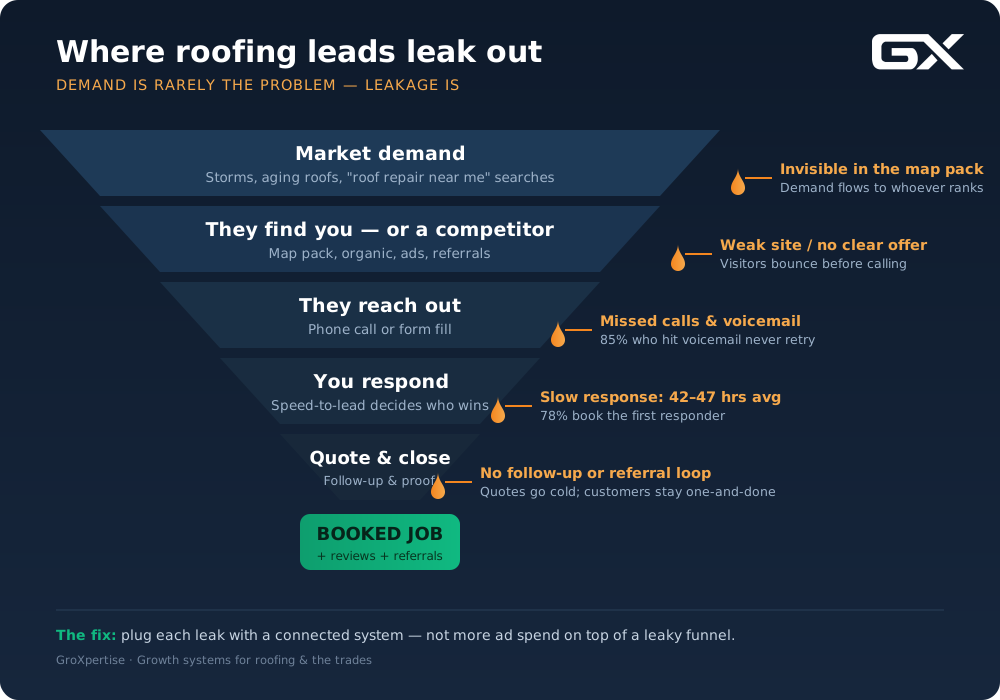
Picture the journey a roofing lead actually takes. Demand exists in your market — storms, aging roofs, “roof repair near me” searches.
Some of those people find you (or a competitor).
A fraction reaches out. A fraction of those actually connect with you. A fraction gets a quote. A fraction sign. And then — mostly — they disappear, never to refer a neighbor or leave a review.
At every one of those handoffs, leads leak out. And the leaks are rarely where owners think they are:
- Visibility leaks.
If you’re not in the Google map pack for your core services, demand simply flows to whoever is. You never even see those leads. - Website leaks.
A slow, confusing, or untrustworthy site lets ready-to-call visitors bounce before they pick up the phone. - Speed leaks.
The single biggest one. The average business takes 42–47 hours to respond to a new lead, while 78% of customers buy from the first company that responds.Every hour you wait, the lead cools — and usually books someone faster.
- Follow-up leaks.
Most quotes get one follow-up attempt, if that. The deals are in the fifth, sixth, and seventh touch. - Reputation leaks.
Without a steady flow of recent reviews, you lose both ranking and trust before the conversation even starts. - Loyalty leaks.
No referral system means every happy customer is a one-and-done — you paid to acquire them once and never compounded it.
The fix for a leaky funnel is not more spending at the top. Pour more water into a leaking bucket, and you just lose more of it, faster.
The fix is to plug the leaks with a connected system — which is exactly what the rest of this guide builds.
The roofing lead engine: a system, not a stack of tools
Most roofing companies don’t have a marketing system.
They have a pile — a website from one vendor, a Google Ads guy, a separate review tool, a CRM nobody updates, a phone that sometimes goes to voicemail.
Each piece works in isolation and leaks at the seams between them.
A lead engine is different. It treats every channel as a feeder into a single connected pipeline, so no lead falls through the cracks, regardless of where it came from.
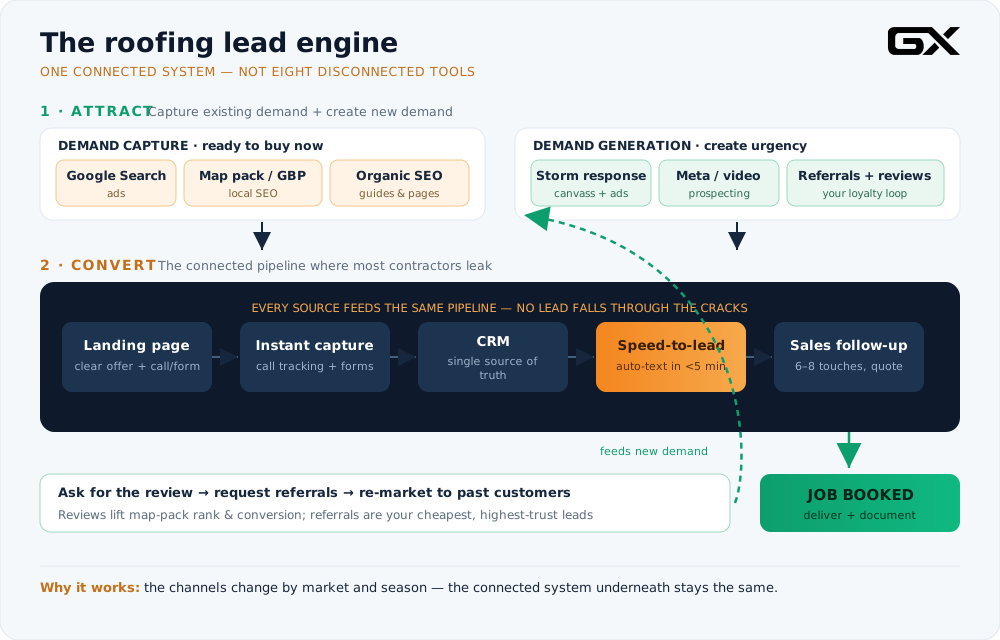
There are two ways to fill the top of that engine, and you need both:
- Demand capture grabs people who are already looking to buy — Google Search ads, the map pack, Google Business Profile, and organic SEO. High intent, higher cost, ready now.
- Demand generation creates urgency and awareness before the homeowner is shopping — post-storm outreach, Meta and video prospecting, and your referral and review loop.
Lower intent per touch, but cheaper and compounding.
Underneath both sits the part that actually determines whether you grow: the connected pipeline — landing page, instant capture, CRM, speed-to-lead, follow-up — feeding a loyalty loop that turns finished jobs back into new demand.
The channels change with your market and the season. The system underneath stays the same.
Build the system once, and every dollar you spend on channels works harder.
Roofing lead generation systems
Lead generation isn’t a single channel; it’s the discipline of matching the right offer to the right intent and making it effortless to respond.
Match the offer to the intent.
A homeowner Googling “emergency roof leak repair” at 9 p.m. wants a phone number and a fast human, not a 12-field form.
A homeowner scrolling Facebook who just saw your storm-damage video isn’t ready to call — but they’ll trade an email for a “Is your roof storm-ready? 5-minute self-check.”
High-intent channels get a phone-first, book-now offer. Lower-intent channels get a low-friction lead magnet that earns permission to follow up.
Lead magnets that fit roofing.
The strongest roofing lead magnets solve a real worry without commitment: a free, no-pressure roof inspection; an instant “what will a new roof cost in my zip code” estimate; a storm-damage checklist; or an interactive calculator that quantifies a problem the homeowner didn’t know how to measure.
(Our own Roofing Lead Leak Calculator and Local Lead Checklist are built on exactly this principle.)
Make responding frictionless.
Click-to-call on every mobile page. Short forms (name, phone, address, “what’s going on”).
Text as a first-class option — many homeowners would rather text a photo of the damage than talk on the phone. And an after-hours path, because a large share of roofing leads arrive in the evenings and on weekends.
A worked example — the roofing funnel math. Numbers make the leaks concrete.
Say a campaign drives 1,000 visitors to your roofing landing page in a month:
- At a strong 8% conversion, that’s 80 leads. At a weak 3%, it’s 30. Your landing page alone is a 50-lead swing.
- Of 80 leads, if you reach and qualify 60%, you get 48 real conversations. Slow response drops that to 25.
- Quote 40 of them, close 30%, and you book 12 jobs. Tighten follow-up to a 40% close, and it’s 16.
- At a $12,000 average job, that’s the difference between $144,000 and $192,000 from the same 1,000 visitors.
Same traffic. Same ad spend. The difference is entirely in the leaks you plugged. That’s the whole game.
Local SEO: own the map pack
When a homeowner searches “roofer near me” or “roof repair [city],” Google shows a map with three businesses on top — the local pack — above the regular results.
Those three spots capture the overwhelming majority of clicks and actions; studies put the local pack at well over 100% more traffic than the listings below it.
For roofers, the map pack is the most valuable real estate online, and it’s earned, not bought.
Google Business Profile is the foundation.
Claim and fully complete it. Get the basics exactly right: business name, address, and phone number identical everywhere they appear online (inconsistent “NAP” data quietly tanks rankings).
Choose the right primary category (“Roofing contractor”) and relevant secondary ones.
Then feed it: real project photos and videos, your service areas, accurate hours, and regular posts. A profile that looks active outranks one that looks abandoned.
Reviews are a ranking factor, not just a trust factor.
Reviews make up an estimated 10–15% of what decides the local pack, and Google weighs volume, recency, and your responses.
We’ll cover the review system in depth below, but know that local SEO and reputation are inseparable — you can’t win the map without a steady stream of reviews.
Build location depth.
Create genuine service-area pages for the towns and neighborhoods you serve, each with real local content — projects you’ve completed there, local storm history, permit notes — not thin copies with the city name swapped.
Add roofing schema markup so Google understands your services. Keep your listings consistent across the major directories.
The payoff is leverage: local SEO compounds.
Unlike ads, which stop the moment you stop paying, a strong map-pack presence keeps generating leads month after month.
It’s no accident that a majority of local businesses say local search delivers more qualified leads than paid channels.
> For the full playbook, see our pillar guide on local SEO for service businesses.
Your website: the highest-leverage leak to plug
Your website isn’t a brochure; it’s the place where paid clicks, map-pack visits, and referrals all convert — or don’t. Because every channel funnels through it, fixing the site is often the single highest-leverage move a roofer can make. Recall the funnel math: moving conversion from 3% to 8% can add 50 leads a month without a dollar of new traffic.
What a high-converting roofing site does:
- Loads fast and works on a phone. Most roofing searches are mobile, often urgent.
A site that takes five seconds to load on a cracked phone in a driveway has already lost the homeowner standing under a leak.
- Leads with one clear promise and one clear action.
Above the fold: what you do, the area you serve, a trust signal, and an obvious way to act — a tap-to-call button and a short “get my free inspection” form. Don’t make people hunt.
- Stacks proof.
Star ratings and review count, before-and-after galleries (framed honestly as representative of your work), manufacturer certifications, licensing and insurance, warranties, and the years you’ve served the area.
Roofing is a high-trust purchase; reduce the homeowner’s fear of getting burned.
- Removes the price objection.
Financing options and “we work with your insurance” messaging keep 35% of homeowners who delay over cost in the conversation, rather than walking away.
- Captures every visitor.
Click-to-call, short forms, live chat or a chatbot for after-hours, and a clear path for both “I have an emergency now” and “I’m just researching.”
> For the deep dive on structure, speed, and conversion, see our roofing website guide. (Internal link — confirm slug before publishing.)
Google Ads for roofers
Google Ads is the most powerful demand-capture channel in roofing — and the easiest place to set money on fire.
The benchmarks are brutal: roofing clicks average around $10–11, conversion rates are the lowest in home services (~3.7%), and cost per lead runs near $228.
The reason most roofing advertisers lose money isn’t that ads don’t work; it’s that they run ads without doing the math first. With a $12,000 average job and even a 25% close rate, a $228 lead is very profitable — if your pipeline doesn’t leak it away.
How to run roofing PPC that actually returns:
- Segment by service line.
Don’t run one “roofing” campaign. Split repair, replacement, storm/insurance, and commercial into separate campaigns with their own keywords, ads, and landing pages.
A tighter intent-to-message match typically cuts the cost per lead by 15–25%.
- Mind your keywords — and your negatives.
Bid on high-intent terms (“roof replacement,” “roof leak repair,” “[city] roofer”).
Then aggressively exclude the budget-wasters: “roofing jobs,” “how to,” “DIY,” “roofing salary,” supplier and material-only searches.
A disciplined negative-keyword list can cut wasted spend by 20–30% in the first month alone.
- Match the landing page to the ad.
A “storm damage repair” ad should land on a storm-damage page, not your homepage.Mismatches are a conversion leak you’re paying for twice.
- Track calls. Most roofing conversions are phone calls.
Use call tracking to see which keywords and ads actually drive booked jobs, not just clicks.
- Retarget. Roofing is a considered purchase; homeowners research for weeks.
Retargeting past visitors on Google and YouTube makes them around 70% more likely to convert at roughly half the cost of cold traffic.
- Add Local Services Ads.
Google’s Local Services Ads (the “Google Guaranteed” badge at the very top) are pay-per-lead and trust-forward — a strong fit for roofers serving homeowners.
Run them alongside Search to capture the highest-intent clicks.
The headline lesson: in roofing PPC, you don’t win by paying less per click.
You win by converting more of the expensive clicks you already bought.
Every other section in this guide — speed-to-lead, follow-up, reviews — is what makes a $228 lead pay off.
Storm damage marketing
Storms are the roofing industry’s demand accelerant.
Roughly two-thirds of roof repairs trace back to storm damage, and areas hit by severe weather can see roof-related claims jump 65% within months.
When a hailstorm rolls through your service area, a year’s worth of demand can land in a single week — and it goes to whoever reaches the homeowner first, with proof, not pressure.
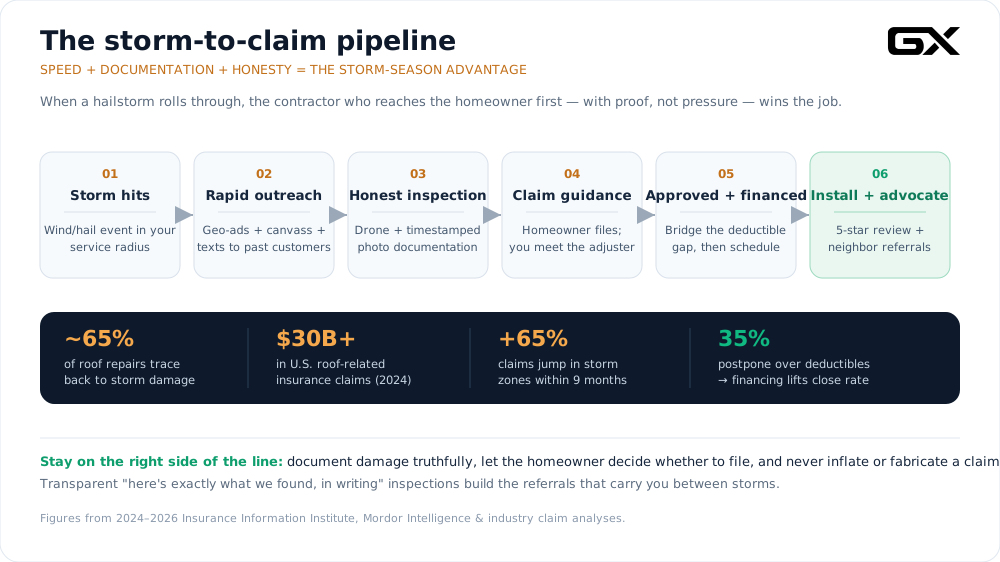
Winning storm season is a logistics-and-speed game built on a pre-loaded playbook:
- Know when and where.
Monitor weather and hail-mapping tools so you can mobilize into affected zip codes within 24–72 hours, before the out-of-town storm chasers blanket the neighborhood.
- Reach homeowners three ways at once.
Geo-targeted Google and Meta ads around the impact zone, organized door-to-door canvassing with a genuine free-inspection offer, and an immediate text/email blast to your existing customers and past-quote list in that area.
- Document, don’t dramatize.
Use drones and timestamped photos to show exactly what you found.
The contractor who hands over a clear, written report — “here’s the damage, here’s what’s fine, here’s your realistic out-of-pocket” — beats the one who leads with fear.
- Be ready to move. Storm leads expect speed.
Pre-built inspection scheduling, instant text responses, and crews on standby turn a chaotic week into your best month.
A caution that protects your business and your license: stay firmly on the right side of the line.
Document damage truthfully, let the homeowner decide whether to file a claim, and never inflate or fabricate damage.
The roofers who build durable, referral-driven businesses are the honest ones — transparency in the driveway is what carries you through the dry spells between storms.
Insurance claim marketing
For most homeowners, a roof replacement is a once-or-twice-in-a-lifetime event, and the insurance process terrifies them.
Position your company as the calm, knowledgeable advocate who makes it simple, and you’ll win jobs on trust alone — separate from price.
The marketing angle is education, not hype. Homeowners are searching for answers: Will my insurance cover this? How do I file a roof claim? What if my claim is denied? Should I file at all?
Create the content — pages, short videos, a simple guide — that answers those questions honestly.
You become the expert they call before they even call their insurer.
Operationally, your insurance-claim system should include:
- A documentation process that produces the photos, measurements, and written reports an adjuster needs — and that the homeowner keeps regardless of whether they hire you.
- Adjuster coordination so you can meet the adjuster on site and make sure damage isn’t missed, while keeping the homeowner in control of the decision.
- Deductible financing. About 35% of homeowners postpone needed roof work over cost, and the deductible is often the sticking point. Offering financing or clear payment options keeps those jobs alive instead of losing them to “we’ll wait.”
- Honest framing throughout. Never promise a specific claim outcome, never coach a homeowner to misrepresent damage, and never “eat the deductible” in ways that cross legal lines. Your reputation and your license are worth more than any single job.
Done right, insurance-claim marketing turns a stressful, confusing event into the reason a whole neighborhood trusts you — because the homeowner you helped tells everyone how easy you made it.
Referral programs
Referrals are the highest-trust, lowest-cost roofing leads you can get.
A neighbor’s recommendation closes faster, negotiates less, and costs you close to $228 per paid lead.
Yet most roofers leave referrals entirely to chance. A real program turns word-of-mouth from luck into a system.
- Ask at the peak moment. The best time to request a referral is right after a successful install, when satisfaction is highest.
Build the ask into your job-completion checklist, so it happens every time, not just when you remember.
- Make the neighborhood see the work.
A yard sign during and after the job, branded truck and crew presence, and a “we just helped your neighbor” door-knock or postcard to the surrounding homes turn one job into several. Roofs are visible; use them.
- Give a reason to share. A simple, ethical incentive — a gift card, a discount on future service, or a donation in the customer’s name for every neighbor who books — gives happy customers a nudge and a story.
- Build referral partnerships.
Insurance agents, real estate agents, property managers, and general contractors all encounter roof problems constantly.A reliable roofer who makes them look good to their clients becomes their go-to.
Cultivate a handful of these relationships, and they’ll feed you steady, pre-qualified work.
Track referrals in your CRM like any other lead source. What gets measured gets asked for — and a roofer who systematically asks will outgrow a better marketer who doesn’t.
Reputation management
Before a homeowner ever calls you, they’ve already judged you — by your reviews. The bar keeps rising.
As of 2026, roughly 88% of consumers read reviews before choosing a local business, nearly 7 in 10 won’t use a business with fewer than 4 stars, and a growing share won’t consider anything below 4.5.
Recency matters as much as rating: many consumers only trust reviews from the last 30 days, which means reputation isn’t a trophy you win once — it’s a flow you maintain.
Build a review system, not an occasional plea:
- Automate the ask. Immediately after a completed job, trigger a text or email with a direct link to your Google review page.
Text tends to get the strongest response. A steady weekly drip of fresh reviews beats an occasional batch, and it signals an active, healthy business to both Google and homeowners.
- Aim for Google first. For roofers, the Google Business Profile is where reviews drive both visibility and trust.
Build there primarily, then diversify to Facebook and industry sites.
- Respond to everything. Nearly all readers look at owner responses.
Thank positive reviewers (and naturally mention the service and city — it helps SEO).
Answer negative reviews promptly, calmly, and with a path to resolution; a professional response to a bad review often impresses the next reader more than a wall of perfect scores.
- Don’t fake it. Never buy reviews or post fakes. Platforms and consumers are increasingly good at spotting it, and the penalties — to rankings and trust — aren’t worth it.
One shift worth planning for: homeowners are starting to ask AI assistants for recommendations — use of tools like ChatGPT for local business suggestions has jumped sharply, from a few percent to roughly 45% of consumers in a year.
Those tools lean on the same signals: strong, recent, well-reviewed profiles and clear, authoritative content.
A solid reputation is increasingly how you get recommended by the algorithm and the human.
Content marketing
Content marketing is how you earn attention and trust before a homeowner is ready to buy — and how you show up in organic search and AI answers for free, compounding over time.
For roofers, the strategy is simple: answer every homeowner question better than anyone else in your market.
- Cost and decision content. “How much does a new roof cost in [city]?” “metal vs. asphalt shingles,” “signs you need a new roof,” “how long does a roof last?”
These capture homeowners early in research and position you as the straight-shooting expert.
- Storm and insurance content. As covered above, the claims process is a goldmine of high-intent questions. Own those answers.
- Pillar guides. A few deep, genuinely useful guides (like this one) outperform dozens of thin blog posts.
They rank, they earn links, and they feed the AI tools homeowners now ask for recommendations.
- Video. Roofing is visual and trust-driven, which makes video unusually powerful.
Drone inspection walkthroughs, before-and-after transformations, “what hail damage actually looks like,” and short owner-to-camera explainers build authority on YouTube (great for research-stage homeowners) and reach on TikTok, Reels, and Shorts.
The mistake to avoid is publishing for its own sake.
Five pieces of content that each answer a real question and point to a clear next step beat fifty that say nothing.
Tie every piece to an offer — an inspection, a checklist, a calculator — so attention turns into leads.
> Our lead generation pillar guide goes deeper on turning content and offers into booked jobs. (Internal link — confirm slug before publishing.)
Email marketing
Email is the cheapest, most-owned channel you have, and in roofing, it does two jobs the others can’t: it nurtures the long consideration cycle, and it reactivates customers you already paid to acquire.
You don’t rent the audience from Google or Meta — you own it.
Build the list deliberately: every past customer, every homeowner who was quoted but didn’t close, every lead-magnet download.
Then put it to work:
- New-lead nurture.
When a homeowner downloads your checklist or requests an estimate but isn’t ready, a short automated sequence — helpful, not pushy — keeps you top of mind until they are.
- Quote follow-up. Most roofing quotes don’t close on the spot.
An automated multi-touch sequence (answering common objections, sharing a relevant project, gently creating urgency) recovers deals that one phone call would have lost.
- Seasonal and maintenance reminders.
Pre-storm-season “is your roof ready?” emails, post-storm “we’re inspecting in your area” alerts, and annual maintenance check-in reminders generate repeat work and inspections from your existing base.
- Reactivation.
Roofs from 12–15 years ago are nearing the end of their lifespan. A simple campaign to old customers — “your roof is getting up there; here’s a free check” — can surface replacement jobs from people who already trust you.
Keep it genuinely useful and appropriately paced. The roofer who stays helpfully in touch is the one the homeowner calls when the ceiling finally stains.
Sales process optimization
Marketing fills the pipeline; the sales process is where most of the money actually leaks out.
Two roofing companies with identical leads and crews will post wildly different revenue based on one thing: how disciplined their sales processes are.
And the first, biggest lever is speed.
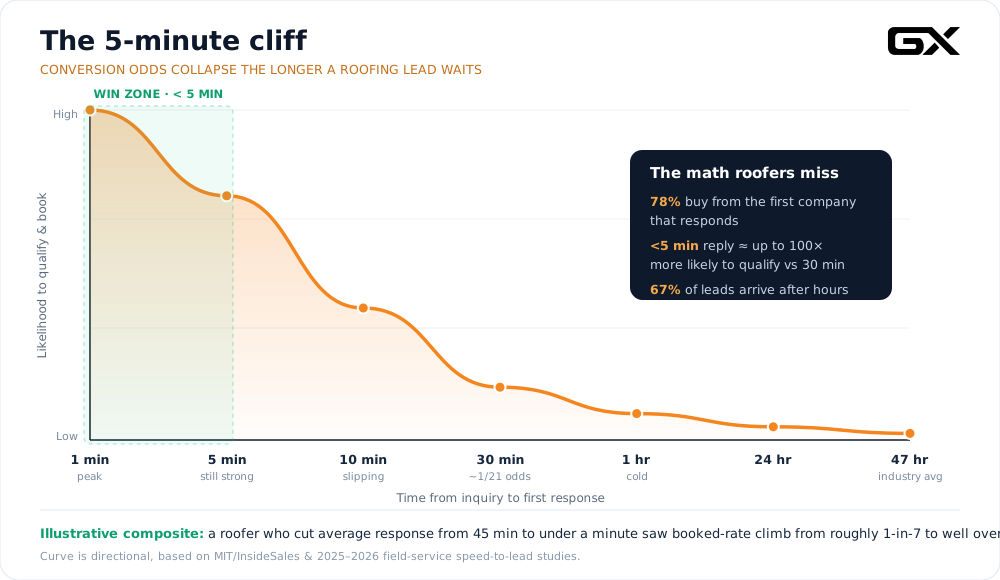
Speed-to-lead is the whole ballgame. The research is unambiguous: responding within five minutes can make a lead up to 100× more likely to qualify than responding at 30 minutes, and 78% of homeowners simply buy from the first company that responds.
Yet the average business takes nearly two days, and most roofers never set up to win the first five minutes.
Meanwhile, 85% of callers who hit voicemail never call back, and most roofing leads arrive after hours.
The contractor who answers — or auto-texts — instantly wins jobs the “better” contractor never even gets to bid on.
The rest of a tight roofing sales process:
- Follow up like you mean it.
The average rep gives up after just one attempt; the deals live in 6 to 8 touches during the first 48 hours, mixing calls, texts, and email.
Persistence isn’t pushy — it’s the difference between a quote and a customer.
- Make the estimate easy and impressive. Offer both in-home and virtual estimates.
Use drone imagery and digital proposals; the professionalism of the estimate is itself a sales tool.
- Lead with financing.
Present payment options before price becomes an objection, so the 35% who’d otherwise stall keep moving.
- Handle objections with proof, not pressure.
Reviews, warranties, certifications, and a clear written scope close more than discounts do.
You can’t fix what you don’t see, which is why the next two sections — CRM and automation — exist.
A great sales process that lives in someone’s head and a stack of sticky notes will leak. A great sales process built into a system holds.
CRM implementation
A CRM (customer relationship management system) is the spine of the entire lead engine.
It’s the single place every lead lands, every conversation is logged, and every job moves through clearly defined stages.
Without it, leads scatter across voicemails, texts, and memory — and scattered leads leak.
What a roofing CRM should do for you:
- Capture every lead automatically from your website forms, call tracking, Google, and Meta — into one place, the moment it arrives, with the source attached.
- Track a clear pipeline: new lead → contacted → inspection scheduled → quoted → won/lost.
Seeing where deals stall tells you exactly which leak to fix.
- Attribute revenue to source so you know which channels produce booked jobs, not just clicks — the only way to spend your budget intelligently.
- Trigger the follow-up (the automation in the next section) so no lead goes dark and no quote goes unchased.
Don’t over-buy. The best CRM is the one your team will actually use every day, integrated with your phone and your follow-up.
There are excellent roofing-specific platforms that bundle CRM, estimating, and production, as well as general CRMs that work well for sales and marketing.
The category matters less than the commitment: pick one, put every lead in it, and make it the source of truth.
A connected CRM is what turns a pile of disconnected tools into an engine.
Automation systems
Automation is the connective tissue that makes speed and follow-up happen without depending on a busy owner remembering.
It’s how a roofing company of any size responds in seconds and consistently follows up for weeks. The highest-ROI automations in roofing:
- Instant lead response. The moment a form is submitted or a call is missed, an automated text fires: “Thanks for reaching out to [Company] — we got your message about your roof, and we’ll call you in just a minute.”
That single automation wins the first-responder advantage that 78% of homeowners reward.
- Missed-call text-back. When a call goes unanswered (you’re on a roof, it’s after hours), an automatic text keeps the lead from calling the next roofer.
- Follow-up sequences. Automated multi-touch cadences for new leads and open quotes ensure the six-to-eight touches actually happen.
- Review requests. Automatically triggered after job completion, fueling the reputation flywheel.
- Appointment reminders. Cut no-shows on inspections and estimates.
- Nurture and reactivation. Seasonal and “your roof is aging” campaigns that run themselves.
A note on AI: AI-powered receptionists and SMS agents now respond to leads in seconds, 24/7, and can qualify, answer common questions, and book inspections — directly closing the after-hours and on-the-roof gaps where roofers leak the most.
Used well, automation doesn’t make your business feel robotic; it ensures a real, fast, helpful response every single time, which is exactly what homeowners reward.
Growth KPIs
You can’t grow what you don’t measure, and “we’re busy” isn’t a metric.
These are the numbers that tell you whether the engine is working and where it’s leaking. Review them monthly.
| KPI | What it tells you | Healthy direction |
|---|---|---|
| Cost per lead (CPL) | Efficiency of your marketing spend | Roofing benchmark is high (~$150–230 paid); lower is better |
| Cost per booked job | True acquisition cost after the funnel | The number that actually matters; watch the trend |
| Lead-to-booked rate | How well sales converts leads | Rising = leaks plugged |
| Speed-to-lead (avg response time) | Your first-responder advantage | Target under 5 minutes |
| Close rate (quote-to-sale) | Sales-process strength | 30%+ is solid; financing and follow-up lift it |
| Customer acquisition cost (CAC) | All-in cost to win a customer | Stable or falling as you scale |
| Average job value | Pricing and job mix | Track by service line |
| Lifetime value (LTV) | Repeat + referral value per customer | Rising = loyalty loop working |
| Return on ad spend (ROAS) | Revenue per ad dollar | Roofing can run ~5–7×+ when the funnel holds |
| Review velocity & rating | Reputation health | Steady weekly reviews, 4.5★+ |
The discipline that separates growing roofers from stuck ones is connecting these end to end: spend → leads → booked jobs → revenue → reviews → referrals.
When you can see the whole chain, you stop guessing and start fixing the specific leak that’s costing you the most this month.
Marketing budget guidelines
How much should a roofer spend on marketing? A workable rule is 7–12% of revenue, weighted toward growth — but the mix matters far more than the headline number, and it should shift as you grow.
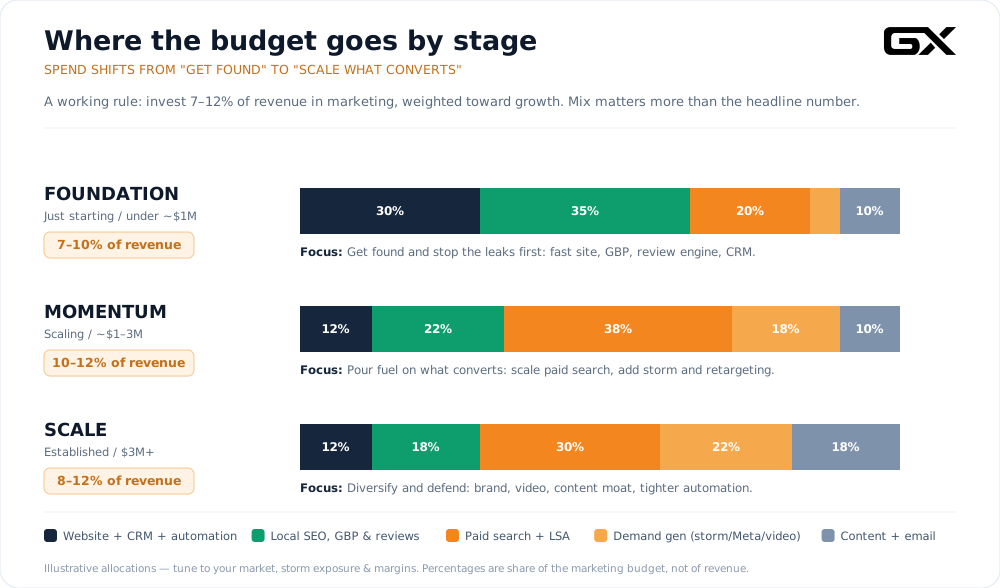
The logic behind the shift: when you’re starting out or under roughly $1M, your money is best spent getting found and plugging leaks — a fast website, a fully optimized Google Business Profile, a review engine, and a CRM. There’s no point pouring ad budget into a funnel that leaks.
As you build momentum, you pour fuel into what’s proven to convert—scaling paid search, adding storm and retargeting campaigns.
At scale, you diversify and defend your position with brand, video, a content moat, and tighter automation.
Two principles hold at every stage. First, spend behind your best-converting channel, not your favorite one — let the KPIs, especially cost per booked job, decide.
Second, storm exposure changes the math. In hail- and hurricane-prone markets, hold a flexible reserve so you can surge spend into affected zip codes within days of a storm; that agility often returns more than any always-on campaign.
Your 12-month growth roadmap
You don’t build the whole engine at once. You plug the worst leaks first — the ones losing you jobs today — then build, add fuel, and compound. Here’s the sequence.

Phase 1 (Days 1–30): Stop the leaks. Fix what’s losing leads right now.
Optimize your Google Business Profile, add call tracking, and enable speed-to-lead auto-texting so every inquiry gets a response in under 5 minutes.
Launch a review request system and set up a single, fast, and clear landing page. This phase rarely requires new ad spend — it just stops the bleeding.
Phase 2 (Days 31–90): Build the engine.
Stand up the connected pipeline.
Launch segmented Google Ads on your core services, get your CRM live with a real six-to-eight-touch follow-up sequence, and pre-load your storm-response playbook.
Start tracking cost per lead and booked rate to establish a baseline.
Phase 3 (Months 4–6): Add fuel.
With the engine holding, scale what converts — more paid search and Local Services Ads, SEO pillar content and service-area pages, retargeting and Meta prospecting — and launch a structured referral program.
The goal: more lead volume at a steady acquisition cost.
Phase 4 (Months 7–12): Compound.
Build the assets that make growth durable and cheaper over time — YouTube and video authority, email nurture and reactivation, commercial and partner outreach, and continuous automation and KPI tuning.
By now, a rising share of your work should come from referrals and repeat customers: the loyalty loop turning finished jobs back into new demand.
Twelve months in, you won’t have a pile of disconnected tools and a vague sense that you “need more leads.”
You’ll have a system — one that captures the demand your market already has, converts far more of it than your competitors do, and compounds every job into the next.
That’s how roofing companies grow in 2026: not by pouring more water into a leaky bucket, but by building a bucket that holds.

Find out where your roofing leads are leaking
Every leak in this guide costs you booked jobs you already paid to generate. Our Roofing Lead Leak Calculator shows you the revenue slipping through the cracks in about 2 minutes—and exactly which leak to plug first.
This guide is for roofing contractor-owners and is grounded in 2024–2026 benchmark data from LocaliQ/WordStream, IBISWorld, Mordor Intelligence, BrightLocal, Birdeye, the Insurance Information Institute, and field-service speed-to-lead research.
Benchmarks are directional; your numbers will vary by market, storm exposure, and how well your funnel holds.
Before-and-after figures are illustrative composites, not specific client results.