

Ask almost any contractor what they need more of, and the answer comes back the same: leads. More phone calls, more estimate requests, more booked jobs. It feels like a volume problem — if we just had more leads, we’d grow.
But here’s what the data keeps showing, and what most owners miss: the majority of service businesses don’t have a lead volume problem. They have a lead leak problem.
Consider the numbers. The average contractor website converts just 2–3% of visitors into a call or form — meaning 97–98% of the traffic you already paid for walks away anonymous. Roughly 14% of inbound calls to home-service businesses go unanswered. And 79% of all marketing leads never convert into a sale, with poor follow-up the single most common culprit. Meanwhile, 78% of customers hire the first company to respond.
Read that again. You don’t lose most jobs because you couldn’t generate the lead. You lose them because the lead slipped through a crack — an unanswered call, a slow callback, an estimate that never got a second touch, a happy customer who was never asked for a referral.
This guide is about plugging those leaks and then building a repeatable engine on top of them. Lead generation for service businesses isn’t a single tactic you buy — it’s a connected system that attracts the right people, captures them before they bounce, follows up fast enough to win, and turns every closed job into the fuel for the next one.
We’ll cover every channel that works for trades like HVAC, plumbing, roofing, and electrical — local SEO, Google Ads, Local Services Ads, Facebook, referrals, email, content, and social — plus the infrastructure that makes them pay off: landing pages, call tracking, CRM, and nurturing. You’ll get real cost-per-lead benchmarks, industry examples, growth frameworks, and a 90-day roadmap you can start on Monday.
Let’s plug the leaks.
What Lead Generation Actually Is (and Isn’t)
Lead generation is the process of turning a stranger who needs your service into a contact you can follow up with — a name and a number attached to real intent. That’s it. Everything else is mechanics.
The mistake is treating “leads” as one undifferentiated bucket. They’re not. The difference between a thriving pipeline and a frustrating one usually comes down to lead quality, not lead count.
A qualified lead is someone who has the problem you solve, is in your service area, has the means and the timeline to buy, and has shown intent — they searched “AC not cooling,” requested an estimate, or called after a storm.
An unqualified lead might be out of your area, price-shopping with no intent to commit, or looking for a service you don’t offer. Twenty qualified leads will out-earn a hundred unqualified ones every time, and they’ll cost you far less aggravation.
It also helps to borrow two terms from the sales world and translate them for the trades:
- A marketing-qualified lead (MQL) is someone who raised their hand — downloaded your pricing guide, filled a form, or called. They’re interested, but not yet vetted.
- A sales-qualified lead (SQL) is an MQL you’ve confirmed is a real fit: right location, real job, ready to schedule an estimate.
Your whole system exists to move people from stranger → MQL → SQL → booked job → repeat customer → referral source. The channels at the top of this guide create MQLs. The infrastructure in the back half converts them. Skip either half, and you leak.
One more reframe before we go further: leads are not the goal. Booked, profitable jobs are the goal. A channel that produces cheap leads that never close is more expensive than an “expensive” channel that books at 40%. Keep your eye on cost per booked job, not just cost per lead — we’ll come back to this when we talk ROI.
The Economics: What Should a Lead Actually Cost?
You can’t manage what you won’t measure, and the first number to internalize is your cost per lead (CPL) — total spend on a channel divided by the number of leads it produced.
But CPL means nothing in isolation. A $185 roofing lead sounds outrageous next to a $20 cleaning lead — until you remember the roofing job is worth $10,000 and the cleaning job is worth $200.
The right way to read CPL is to compare it against your ticket size and close rate. Here are current US home-services benchmarks to anchor your targets.
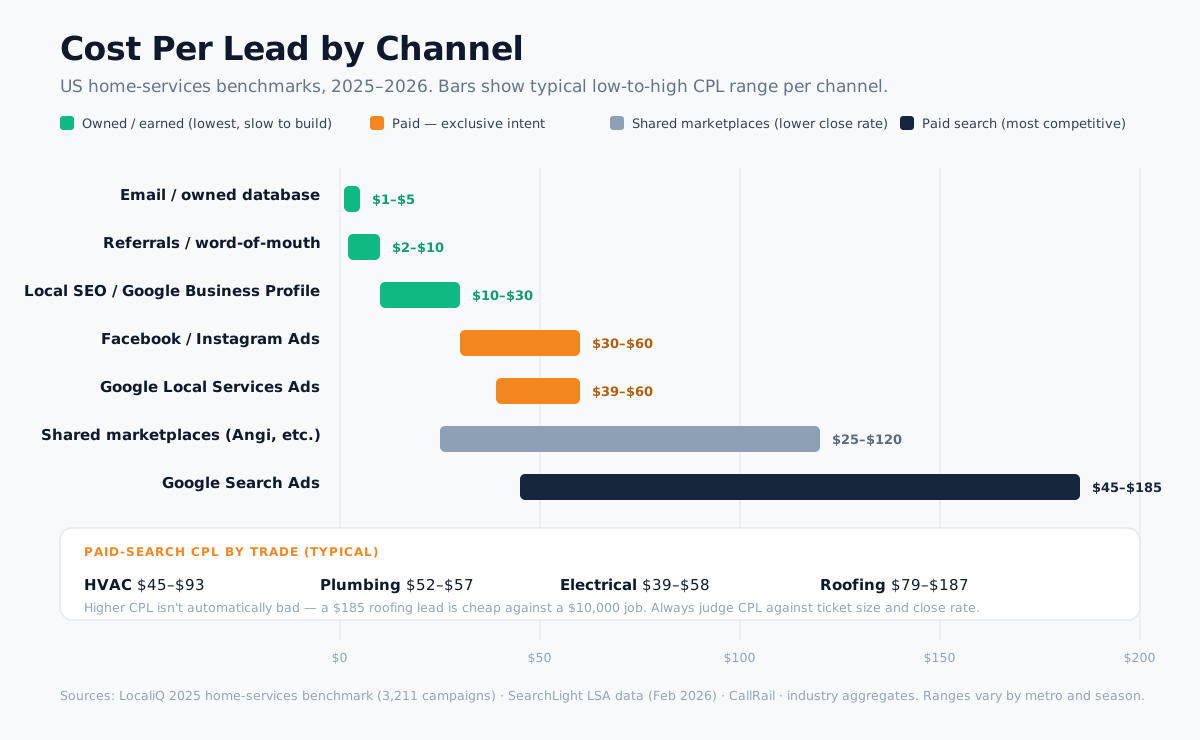
A few patterns worth burning into memory:
- Owned and earned channels are dramatically cheaper. Local SEO leads run roughly $10–$30 once you’ve built rankings; referrals and email reactivation can effectively cost a few dollars. They take longer to build but compound forever.
- Local Services Ads (LSAs) are the best-value paid channel for most trades. Recent data across 888 contractors put the blended LSA cost per lead near $53 — about $51 for HVAC, $57 for plumbing, and $39 for electrical — with a booking rate close to 44%. That’s exclusive, high-intent, pay-per-lead inventory.
- Google Search Ads are powerful, but the most competitive. Benchmarks put HVAC near $45, plumbing near $52, electrical near $58, and roofing near $79 (and higher in dense metros) — and costs rose year over year for about 69% of advertisers.
- Facebook and Instagram typically land around $30–$60 per lead for local campaigns and shine at demand generation and retargeting.
- Shared lead marketplaces (Angi and the like) look cheap per lead but sell the same lead to several contractors, so close rates suffer. Leads from your own marketing convert several times better.
Whatever your trade, plug your own numbers into a lead leak calculator to see what a single point of conversion improvement is worth — it’s almost always more than any new ad channel would add.
Building a Lead Generation System
If you take one idea from this entire guide, make it this: a system beats a tactic, every time.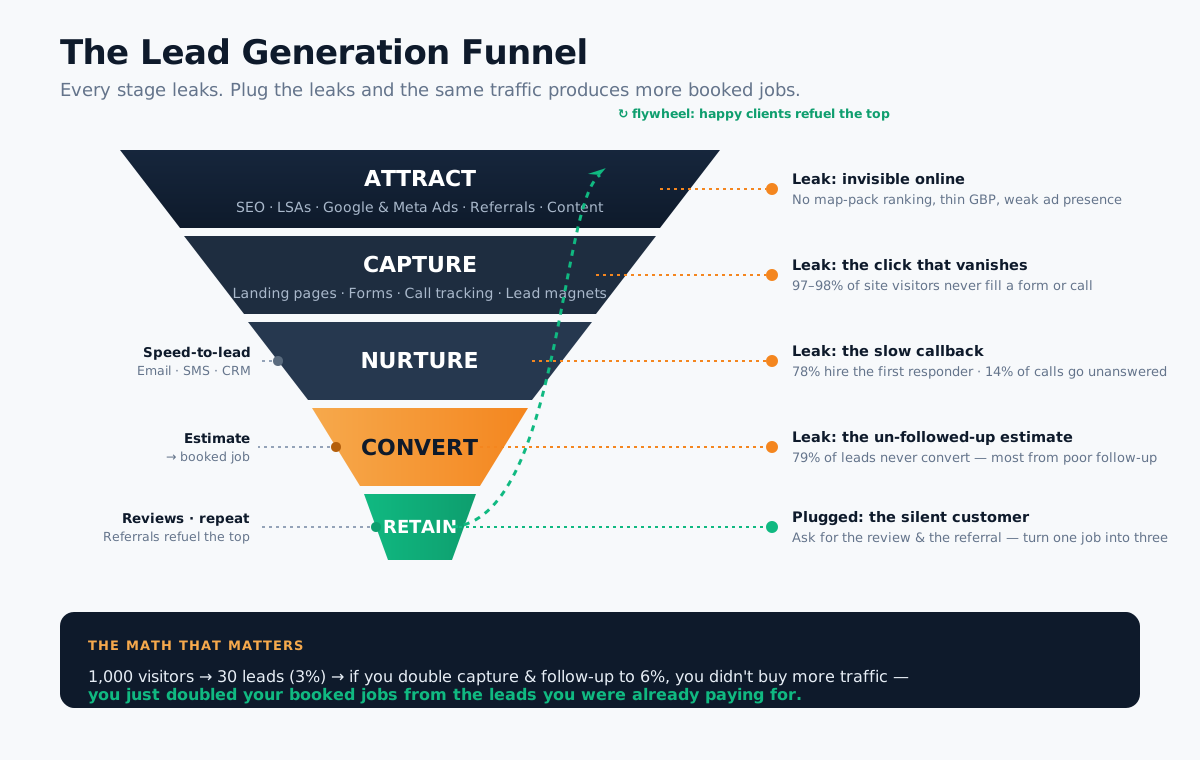
The five stages are simple:
- Attract — get in front of people who need you (SEO, ads, referrals, content).
- Capture — turn that attention into a contact before they bounce (landing pages, forms, tracked phone numbers).
- Nurture — stay in front of the ones who aren’t ready yet (fast replies, email, SMS).
- Convert — turn the contact into an estimate, then a booked job.
- Retain — turn the job into reviews, repeat work, and referrals that refill the top.
Notice where the leaks sit. Most owners obsess over stage one — more traffic! — when their biggest losses are in stages two through four, where it’s far cheaper to fix them.
Doubling your capture-and-follow-up rate from 3% to 6% doesn’t cost you a dollar of extra ad spend, but it doubles your booked jobs from the leads you’re already paying for.
Underneath the funnel lies the operational system that powers it. This is where the “disconnected tools” problem bites — every tool that doesn’t talk to the next one is a place where a lead can slip through the cracks.
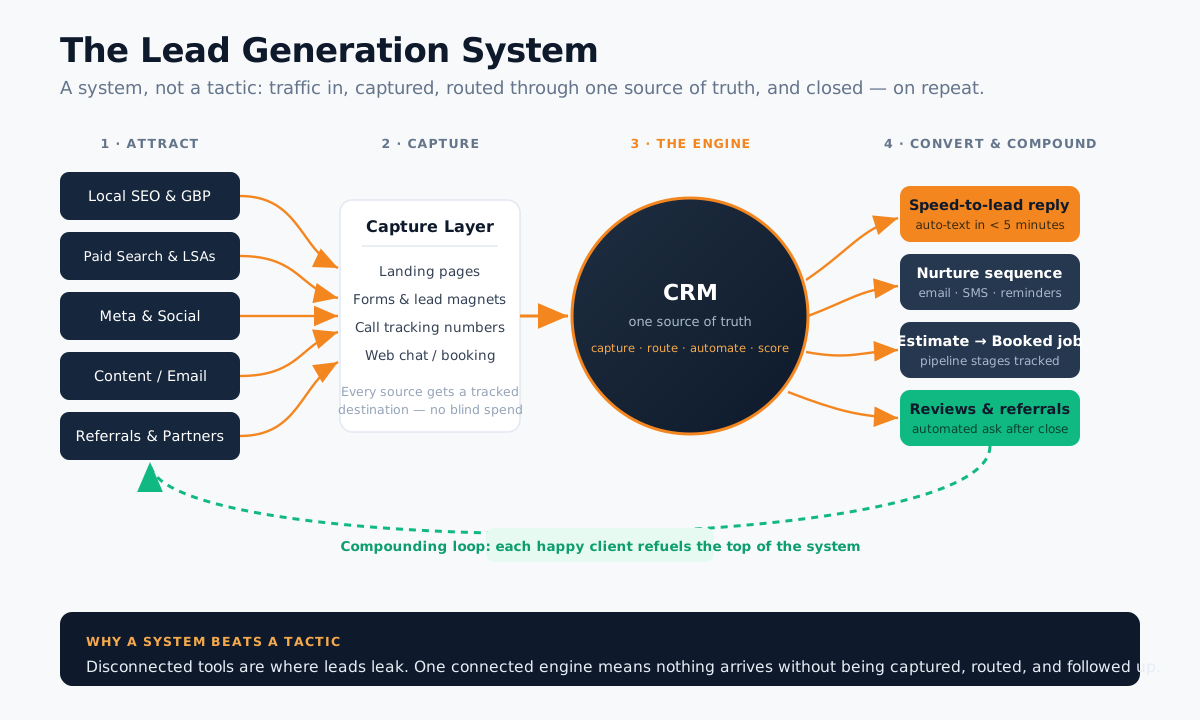
The non-negotiable pieces:
- Every traffic source points to a tracked destination — a dedicated landing page or a tracked phone number — so you always know what’s working.
- A CRM is the single source of truth. Every call, form, and chat lands in one place, automatically. No sticky notes, no “I think Mike has that one.”
- Speed-to-lead is automated. The instant a lead arrives, it gets an auto-reply and an alert to your team. (More on why this is the highest-ROI fix you can make below.)
- The loop closes. After every job, an automated ask brings in the review and the referral — refueling the top of the funnel for free.
Build this skeleton first. Then, and only then, turn on channels to feed it. Here’s how each one works.
Local SEO: The Highest-ROI Channel You Can Own
For a service business, local search is the storefront. When someone types “emergency plumber near me” or “AC repair [your city],” the results that appear — especially the map pack of three local listings at the top — capture the highest-intent buyers. And once you rank, the leads cost a fraction of what paid channels cost: roughly $10–$30 each, forever.
The foundation is your Google Business Profile (GBP). Claim it, verify it, and fill out every field: services, service areas, hours, photos, and a keyword-rich description.
Profiles with complete information and a steady flow of recent reviews dominate the map pack. Then build out your website with service-area pages — a dedicated page for each city or neighborhood you cover, each one targeting “[service] in [city].” These pages are what let you rank for searches outside your home base.
Add genuinely helpful content (we’ll cover content marketing shortly), keep your name, address, and phone number consistent across the web, and earn local backlinks from suppliers, associations, and community sponsorships.
It’s a slow build — usually a few months to traction —, but it’s the closest thing to free, durable lead flow.
Industry example: An HVAC company that ranked in the map pack for “AC repair” across four surrounding suburbs reduced its blended CPL by more than half within two seasons, because organic leads displaced a chunk of its paid spend. The leads were also warmer — people who chose them from search, not people they interrupted.
Want the full playbook? Our Ultimate Local SEO Guide for Service Businesses goes deep on every ranking factor. To audit your own setup, grab the trade-specific local lead checklist.
Google Search Ads: Buying Intent at the Top of the Page
Where SEO is a long game, Google Search Ads buy you the top of the page today. When someone searches with high intent — “water heater replacement,” “roof leak repair” — a well-built campaign puts you in front of them the moment they’re ready to call.
The power of search ads is intent: you’re not interrupting anyone, you’re answering a question they just asked. The catch is cost and competition. Home services are among the most expensive verticals in Google Ads, with cost per click commonly $4–$9 and CPL ranging from about $45 for HVAC to $79+ for roofing.
To keep CPL sane:
- Split campaigns by service line. A generic “HVAC” campaign almost always underperforms separate “AC repair,” “furnace repair,” and “AC installation” campaigns, because each can have tightly matched ad copy and a relevant landing page.
- Lean on exact and phrase match and a robust negative keyword list to stop wasting spend on “DIY,” “jobs,” “salary,” and out-of-area searches.
- Send clicks to a dedicated landing page, never your homepage. This single change often doubles the conversion rate.
- Bid on your own brand name. It’s cheap, it protects you from competitors bidding on you, and branded leads close far better.
Track cost per booked job, not just cost per lead. A campaign at a $90 CPL that books 40% of leads beats a $50 CPL campaign that books 10%.
Local Services Ads: The Best-Value Paid Channel for Trades
If you run only one paid channel to start, make it Google Local Services Ads (LSAs). They sit at the very top of the search results — above the regular ads and the map pack — and they work on a pay-per-lead model instead of pay-per-click. You only pay when someone actually contacts you.
Better still, they come with the Google Guaranteed badge, which verifies a contractor and provides a visible trust signal that boosts response rates.
Recent data across hundreds of contractors put the blended LSA cost per lead near $53 — roughly $51 for HVAC, $57 for plumbing, and $39 for electrical — with booking rates around 44% and returns that beat virtually every other paid channel.
For most trades, that math leaves a comfortable margin between what a lead costs and what you can afford to pay.
To win with LSAs:
- Complete the verification — background and license checks — to earn the badge. This is the gate, and it’s worth clearing.
- Pour reviews into your profile. LSA ranking leans heavily on review count, recency, and rating, plus your responsiveness.
- Answer the phone, fast. LSA leads are live, high-intent calls. Miss them, and you’ve paid for a lead you let leak. Dispute any genuinely off-target leads (wrong service, spam) — Google credits them.
LSAs are exclusive, high-intent, and trust-stamped. For HVAC, plumbing, roofing, and electrical, they’re usually the fastest path to a positive return.
Facebook & Instagram Ads: Creating Demand You Couldn’t Catch on Search
Search captures people who already know they need you. Meta ads (Facebook and Instagram) do something search can’t: they put you in front of homeowners before they start searching — and they bring back the ones who already visited and left.
Local Meta campaigns typically run $30–$60 per lead and excel at three jobs:
- Retargeting. Show ads to people who visited your site but didn’t convert. These are your cheapest, warmest paid leads — you’re nudging someone who was already interested.
- Seasonal demand generation. A “Beat the summer rush — schedule your AC tune-up” offer reaches homeowners scrolling at night who weren’t searching yet but are easy to convince.
- Lead-form ads. Meta’s instant forms let people request a quote without leaving the app, pre-filled with their info. Low friction, high volume — just make sure those leads flow straight into your CRM and get an instant reply, or they cool off fast.
The creative that works for trades is unfussy: real photos of your crew and your work, a clear before/after, a specific offer, and an honest local voice. Polished and corporate underperforms genuine and local almost every time.
Content Marketing: Becoming the Answer Before the Sale
Every homeowner with a problem starts with a question. “Why is my AC freezing up?” “How much does a roof replacement cost?” “Is my water heater supposed to make that noise?” Content marketing means being the business that answers those questions — and earning trust (and the eventual call) in the process.
This matters more than ever as buyers shift. A growing share of homeowners now start at the discovery stage with AI tools and search, asking open questions before they ever look for a specific company.
Businesses whose content clearly answers those questions show up in those answers; businesses without it stay invisible.
For trades, the content that pulls its weight is practical and local:
- “How much does [service] cost in [city]?” — pricing-transparency articles capture huge search volume and pre-qualify buyers.
- Problem/symptom guides — “5 signs you need a new furnace” — catch people early and position you as the expert.
- Seasonal and emergency content — “What to do when your basement floods” — earns the link and the call in the moment of need.
Content is a compounding asset. A single strong guide can generate leads for years at a CPL that drops toward zero over time, and every article is another place to link to your calculators, checklists, and service pages. It’s slow, but it’s the cheapest lead source you’ll ever build.
Email Marketing: The Channel You Already Own
Every customer you’ve ever served, every estimate you’ve ever sent, every form fill that didn’t book — that’s an email list, and it’s the cheapest lead source on earth.
Reactivating an existing contact effectively costs a few dollars at most, and these are people who already know you.
Service businesses leave enormous amounts of money here untouched. A simple monthly or seasonal email — maintenance reminders, a limited-time tune-up offer, a genuinely useful tip — keeps you top of mind for the moment something breaks.
The rule of thumb: if your last marketing-driven sale to a past customer was more than 30 days ago, your owned channel is broken.
Three email plays every contractor should run:
- Speed-to-lead and nurture sequences for new leads who didn’t book immediately (covered in nurturing below).
- Seasonal campaigns tied to the calendar — pre-summer AC checks, pre-winter furnace tune-ups, spring roof inspections.
- Reactivation campaigns to past customers: “It’s been a year since your last service — time for a tune-up?”
Segment by service history so the message is relevant, keep it short and useful rather than salesy, and always include one clear next step. Email won’t replace your acquisition channels, but it quietly raises the lifetime value of every lead the rest of the system brings in.
Referral Marketing: Your Cheapest, Highest-Closing Leads
A referred lead is the best lead there is: it arrives pre-trusted, closes at a far higher rate, and costs almost nothing. Yet most contractors treat referrals as something that just happens rather than a channel they actively run.
That’s a leak — the silent customer who would have referred three friends if you’d simply asked.
Turn referrals from luck into a system:
- Ask at the peak moment — right after a job goes well, and the customer is delighted. Make it specific: “If you know anyone who needs [service], we’d love an introduction.”
- Make it rewarding for both sides. A double-sided incentive — say, a discount or gift card for the referrer and the new customer — dramatically lifts participation. Keep it simple and worth their while.
- Automate the ask. Build the referral request into your post-job workflow so it goes out every time, not just when you remember.
The same loop applies to past-customer reactivation: your happiest existing customers are both your best repeat buyers and your best referral engine. A formal referral program is one of the few “channels” that gets cheaper and better as you grow.
Review Generation: The Trust Layer That Sells For You
Before a homeowner ever calls, your reviews have already made the case for or against you. The research is blunt: about 91% of consumers read local reviews, and most won’t even consider a business rated under four stars.
A roofer with 200 recent reviews and a 4.8 will win the estimate over a better roofer with 12 reviews and no responses. Reviews aren’t reputation management — they’re sales.
Reviews also feed your other channels directly: they’re a top-ranking factor for the Google map pack and for LSA placement. More five-star reviews literally lower your cost per lead by lifting you in free and paid local results.
Build a review engine:
- Automate the request — text or email every customer a direct link to leave a review the day after the job, while the experience is fresh. The single biggest reason businesses have few reviews is that they never ask.
- Make it one tap. Pre-fill the link to your Google profile. Every extra click loses people.
- Respond to every review, good and bad. Prospects read your responses to see how you handle problems — a thoughtful reply to a complaint can win more trust than the complaint cost you.
- Aim for recency and volume. A steady drip of fresh reviews beats a pile of old ones; homeowners notice dates.
Partnerships & Networking: Borrowing Someone Else’s Trust
Some of the most reliable lead sources never touch an ad platform. Adjacent businesses already serve your customers — they just don’t compete with you.
A real estate agent’s clients need inspectors, HVAC techs, and electricians. A property manager needs every trade on speed dial. A plumber and an electrician constantly refer to each other.
Strategic partnerships let you borrow another business’s trust and customer base:
- Map the adjacencies. For an HVAC company: realtors, home inspectors, property managers, electricians, insulation contractors, solar installers. Each is a potential steady stream of referrals.
- Make it reciprocal and easy. Refer them to business first, give them simple materials to hand out, and keep the relationship warm. Reciprocity is what makes these partnerships last.
- Get in front of the right rooms. Local builder associations, chambers of commerce, BNI-style referral groups, and property-management networks put you face-to-face with people who control recurring work.
Commercial and recurring-maintenance contracts often start here, not online. One solid property-management relationship can be worth more than an entire ad budget.
Social Media Marketing: Staying Visible Between Jobs
Organic social won’t flood your phone with leads, but it does something quieter and valuable: it keeps you visible and credible to your community, so when a need arises, you’re already familiar.
For trades, the content that works is proof — short videos of real jobs, satisfying before/afters, quick tips, and the occasional behind-the-scenes look at your crew.
Short-form video — Reels, TikTok, YouTube Shorts — has by far the most organic reach right now, and “oddly satisfying” trade work (a drain finally clearing, a clean ductwork install, a roof transformation) performs unreasonably well.
You don’t need production value; you need authenticity and consistency. Post the work you’re already doing.
Practical approach: pick one or two platforms you’ll actually maintain rather than spreading thin across five. Repurpose the same clip everywhere. Always point viewers to the next step — a profile link to your booking page or a lead magnet.
And remember social’s compounding side effect: the content doubles as social proof that boosts every other channel, and the videos can be repurposed straight into your paid ads.
Lead Magnets: Giving People a Reason to Raise Their Hand
Most website visitors aren’t ready to book the second they land — but plenty are willing to trade their email for something useful.
A lead magnet is that something: a free, genuinely valuable resource that captures contact information from people who aren’t yet ready to call, so you can nurture them instead of losing them.
The trick is relevance and low friction. For service businesses, the lead magnets that convert are practical and specific:
- Interactive calculators — “How much are slow follow-ups costing you?” or “Estimate your project cost” — are especially powerful because they’re useful, personalized, and a little addictive. Our Lead Leak Calculator is built exactly for this.
- Checklists and guides — “Pre-winter furnace checklist,” “Questions to ask before hiring a roofer” — pull in researchers early.
- Pricing guides and quote tools — homeowners crave price transparency, and these self-qualify your leads.
- Seasonal offers and inspections — a free or discounted inspection captures intent at the moment of need.
A lead magnet converts cold traffic into a known contact you can follow up with. Without one, that traffic just bounces — another leak. Every channel above should point to either a direct booking or a lead magnet, never a dead end.
Landing Pages: Where Conversions Are Won or Lost
Sending paid traffic to your homepage is one of the most expensive mistakes contractors make. A homepage is a general-purpose front door with a dozen possible actions. A landing page is built for exactly one thing: capturing this lead.
That focus is why a dedicated landing page routinely doubles or triples conversion rate compared with a homepage — and remember, most contractor sites convert only 2–3% to begin with, so there’s enormous room to win here.
The anatomy of a landing page that converts:
- One message, matched to the ad. If the ad said “24/7 emergency drain cleaning,” the page headline says the same. A message match reassures the visitor that they’re in the right place.
- The phone number, large and clickable, above the fold — most of this traffic is mobile and ready to call now.
- A short form. Every extra field costs you conversions; ask only for what you need to follow up.
- Trust signals up top — star rating, review count, the Google Guaranteed badge, licenses, years in business.
- Speed. A slow page load leads to a loss of conversions on mobile; every extra second of load time costs conversions. Keep it fast and clean.
- One clear action. Strip the navigation and competing links. The only choices are “call” or “fill the form.”
Build a dedicated landing page for each major service and each campaign. The lift in conversion rate is almost always cheaper than buying more traffic to compensate for a leaky page.
Call Tracking: You Can’t Optimize What You Can’t See
Service businesses run on phone calls — and phone calls are where attribution goes to die. If you don’t know which channel produced which call, you’re flying blind: you can’t tell which ads to scale and which to cut, and you can’t catch the calls you’re missing. Call tracking fixes both.
Call tracking assigns a unique phone number to each channel — one for LSAs, one for Google Ads, one for your GBP, and one for each landing page. When a call comes in, you know exactly where it came from.
That turns “we spent $3,000 on ads last month” into “Google Ads produced 22 calls and 9 booked jobs; the Facebook campaign produced 14 calls and 2.”
Just as important, call tracking records and surfaces the calls you’re missing. With roughly 14% of home-service calls going unanswered — each one a paid-for lead leaking away — knowing your answer rate is half the battle.
Many platforms now layer on AI answering, so after-hours and overflow calls still get captured rather than lost.
What to do with it:
- Tag every channel with its own tracked number so attribution is clean.
- Review missed and abandoned calls weekly — they’re your most expensive leak, and the cheapest to fix.
- Feed call outcomes back into the CRM so you’re measuring booked jobs per channel, not just calls.
CRM Integration: One Place Where Nothing Falls Through
Here’s where most leaks become invisible. A lead comes in by phone, another by web form, another by Facebook, another by LSA — and they land in four different inboxes, apps, and notepads. Some get followed up, some don’t, and nobody can see the whole picture. The disconnected-tools problem is the leak problem.
A CRM (customer relationship management) system solves it by becoming the single source of truth. Every lead, from every channel, automatically lands in one place. From there, it can be routed, assigned, followed up, and tracked through every stage from new lead to booked job to repeat customer.
What integration unlocks:
- Nothing gets lost. Every form, call, and chat is captured the instant it arrives — no manual entry, no forgotten sticky note.
- Automated follow-up fires on its own — the speed-to-lead text, the nurture sequence, the review request — without anyone remembering to do it.
- Full pipeline visibility. You can see how many leads are at each stage, where deals stall, and what your true conversion rate is.
- Clean ROI math, because every lead is tagged with its source and outcome.
You don’t need an enterprise platform. You need one system that connects your channels, automatically captures every lead, and triggers follow-up without human effort. That connection is the difference between a leaky pile of tools and a lead-generation machine.
Lead Nurturing: Speed First, Persistence Second
Two facts should reshape how you handle every incoming lead. First, 78% of customers hire whichever company responds first. Second, responding within the first minute can lift conversions enormously, while waiting just five minutes sharply cuts your odds of even qualifying the lead — and more than half of contractors take days to respond.
The gap between businesses that win and those that lose is often measured in minutes.
Speed-to-lead is the highest-ROI fix in this entire guide. The instant a lead arrives, it should get an automated text or call-back within minutes — “Thanks for reaching out, we got your request, and we’ll call you in the next few minutes” — plus an immediate alert to your team. That alone can swing a money-losing channel into a profitable one.
But speed only handles the ready-now leads. The rest — and 79% of leads never convert, mostly from neglect — need persistence. A nurture sequence keeps following up automatically, so leads don’t go cold:
- A multi-touch sequence over the first week or two — a mix of text, email, and a call attempt — dramatically out-converts a single follow-up.
- Long-cycle leads (big installs, roof replacements, anything with a 30–90 day decision) need patient nurturing: reminders, financing options, seasonal check-ins until they’re ready.
- Re-engagement for leads that went quiet — a simple “still thinking about that estimate?” recovers more jobs than most owners expect.
The businesses that win aren’t necessarily the cheapest or even the best. They’re the ones who respond first and follow up most. Both can — and should — be automated.
Measuring ROI: The Numbers That Tell You Where to Spend
Once leads are flowing, the question shifts from “how do I get leads?” to “where should my next dollar go?” That’s a measurement question, and the contractors who answer it well compound their advantage every quarter.
Track these by channel:
- Cost per lead (CPL) — spend ÷ leads. Your starting benchmark is useful but incomplete on its own.
- Lead-to-booked-job rate — the percentage of leads that become paying jobs. This is where channel quality shows up.
- Cost per booked job — spend ÷ booked jobs. This is the number that actually matters. A channel with a high CPL but a high close rate often beats a “cheap” one.
- Customer lifetime value (LTV) — total profit from a customer over time, including repeat work and referrals. A maintenance customer is worth far more than a single repair, which changes what you can afford to pay to acquire one.
- Return on ad spend (ROAS) — revenue (better yet, profit) generated per dollar spent.
The discipline is simple: measure cost per booked job and LTV by channel, then move money toward what’s working and away from what isn’t.
Most contractors who do this for one quarter discover that one or two channels carry the whole pipeline — and that their biggest gains come not from a new channel, but from fixing conversion in the funnel they already have.
Run your own numbers through a lead leak calculator to see exactly where your money is leaking.
A practical cadence: a quick weekly look at leads, missed calls, and speed-to-lead; a deeper monthly review of cost per booked job and ROI by channel. What gets reviewed gets fixed.
A Growth Framework for a Predictable Pipeline
The goal of all of this isn’t a good month. It’s predictability — knowing that if you put X in, roughly Y booked jobs come out, so you can plan, hire, and grow with confidence. Here’s a simple framework to get there and stay there.
- Stop the leaks before opening the spigot. Fix capture and follow-up first — landing pages, call answering, speed-to-lead, CRM. Pouring more traffic into a leaky funnel just makes the leak more expensive. This is always the highest-return work.
- Build a balanced channel mix. Don’t bet the business on one source. A resilient contractor mix looks roughly like: 40% paid (LSAs + Google Ads), 30% organic and GBP, 20% referrals and repeat customers, and 10% other (email, SMS, social).
Paid gives you speed; owned and earned give you durability and margin. The blend protects you when any single channel’s costs spike or its algorithm shifts.
- Know your unit economics cold. When you know your average ticket, close rate, and the most you can profitably pay per lead, every spending decision becomes obvious. You stop guessing and start buying booked jobs at a known price.
- Compound what works. Reinvest from your best channels, double down on the content and reviews that lift everything else, and keep the referral and reactivation loops turning.
The flywheel — happy customers producing reviews and referrals that lower the cost of the next customer — is what turns linear effort into compounding growth.
- Review and reallocate on a fixed cadence. Weekly for leaks, monthly for ROI. Cut the worst, feed the best, and forecast the next quarter from real conversion data rather than hope.
Do this consistently, and lead generation stops feeling like a slot machine and starts feeling like a machine you control.
Your 90-Day Lead Generation Roadmap
Knowing what to do is one thing; sequencing it is another. Here’s how to go from scattered tactics to a predictable pipeline in one quarter. The order matters — plug the leaks, then turn on demand, then compound it.
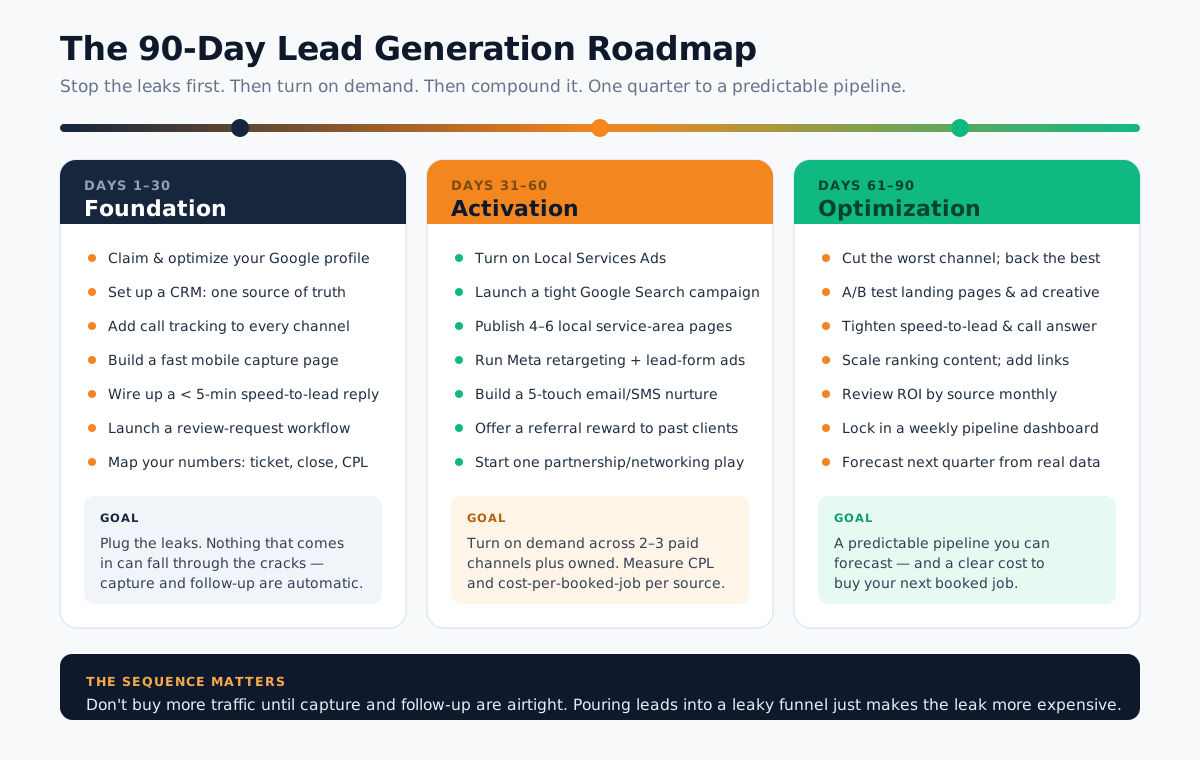
Days 1–30 — Foundation (stop the leaks). Claim and fully optimize your Google Business Profile. Stand up a CRM as your single source of truth. Add call tracking to every channel.
Build one fast, mobile lead-capture landing page. Wire up a speed-to-lead auto-reply that fires in under five minutes.
Launch a review-request workflow. And map your core numbers: average ticket, close rate, and target CPL. Goal: nothing that comes in can fall through the cracks.
Days 31–60 — Activation (turn on demand). Switch on Local Services Ads — the fastest path to exclusive, high-intent leads. Launch a tight Google Search campaign split by service line.
Publish four to six local service-area pages. Run a Meta retargeting and lead-form campaign. Build a five-touch email/SMS nurture sequence. Launch a referral offer for past customers and set up one partnership.
Goal: demand flowing across two or three paid channels plus your owned ones, with CPL and cost-per-booked-job measured per source.
Days 61–90 — Optimization (compound it). Cut your worst-performing channel and reinvest in your best. A/B test landing pages and ad creative. Tighten speed-to-lead and call-answer rates.
Scale the ranking content and add internal links. Review ROI by source, lock in a weekly pipeline dashboard, and forecast next quarter from real data.
Goal: a predictable pipeline you can plan around — and a clear, known cost to buy your next booked job.
Ninety days won’t make you perfect. It will make you predictable, which is the foundation on which everything else is built.
The Bottom Line
Lead generation for service businesses isn’t about finding one magic channel. It’s about building a connected system — and plugging the leaks that quietly drain the leads you’re already paying for.
Remember where the money actually goes. Most jobs aren’t lost at the top of the funnel due to a lack of leads. They’re lost in the middle: the unanswered call, the slow callback, the un-followed-up estimate, the customer who was never asked for a review or a referral.
Fix those, then layer on channels that feed a funnel that finally holds water, and the same effort produces dramatically more booked jobs.
Start with the foundation. Stop the leaks. Turn on demand. Measure what matters. Compound what works. Do that for one quarter, and you’ll have something most of your competitors never build: a lead-generation machine you can actually rely on.
Find out where your leads are leaking right now — run your trade’s numbers through the Lead Leak Calculator and get a 3-move action plan to plug the biggest gaps first.
GroXpertise builds growth systems for home-service businesses — HVAC, plumbing, roofing, and electrical. We don’t just get you more leads. We make sure you stop losing the ones you already have.